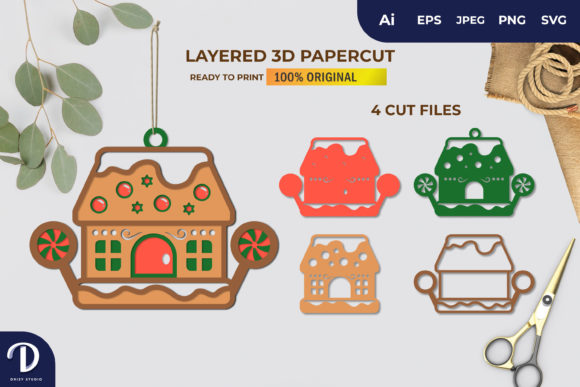
3D Layered Papercut Gingerbread House
The intersection of traditional holiday aesthetics and modern digital fabrication has given rise to a unique category of decorative arts. Among these, the 3D Layered Papercut Gingerbread House stands out as a versatile design that bridges the gap between simple paper crafts and complex structural art. This specific design is not merely a flat illustration but a multi-dimensional object created through precise layering techniques. It offers enthusiasts, crafters, and interior designers a tangible way to capture the whimsical spirit of the season while utilizing contemporary tools like Cricut machines and LED lighting.
Understanding what this project entails requires looking beyond the visual appeal. A 3D layered papercut involves cutting multiple distinct pieces from cardstock or similar materials and stacking them in a specific sequence to create depth. The gingerbread house theme provides a familiar, cozy narrative structure, allowing for intricate detailing on each layer—from roof tiles to window frames. When assembled correctly, these layers transform a two-dimensional concept into a three-dimensional sculpture that interacts with light and shadow, making it suitable for various applications ranging from static wall decor to dynamic light boxes.
Technical Specifications and File Formats
For those planning to execute this project, the technical preparation is just as critical as the physical assembly. The digital assets provided for such designs are typically comprehensive, ensuring compatibility across different software platforms and output methods. The standard package includes an SVG file, which is essential for users of cutting machines like Cricut or Silhouette. This vector format allows for precise scaling and clean cuts, preserving the integrity of small details that might be lost in lower-resolution formats.
Beyond the SVG, the inclusion of Adobe Illustrator (AI) and EPS6 files ensures that professional designers can edit the artwork further if needed. These vector-based formats maintain scalability without quality loss, which is crucial when adjusting the size of the final piece. For non-digital users or those who prefer manual crafting, high-resolution raster images are also provided. Specifically, JPEG files at 3000x2000 pixels and PNG files at 2804x2804 pixels offer sufficient clarity for printing and tracing onto cardstock. The dimensions of the base design, often cited around 750x500 units in vector space, provide a balanced aspect ratio that fits well on standard walls or shelves.
Versatility in Application: Light Box vs. Wall Decoration
One of the primary reasons for the popularity of the 3D Layered Papercut Gingerbread House is its dual functionality. It can serve as a static wall decoration, relying on the contrast between layers to create visual interest. In this configuration, the piece acts as a relief sculpture, where shadows cast by the overlapping layers add depth even under ambient room lighting. This makes it an excellent choice for maintaining a festive atmosphere without requiring electrical connections.
However, the design’s true potential is often realized when converted into a light box. By integrating LED strips behind the layered structure, the papercut transforms into a glowing centerpiece. The translucent nature of certain cardstocks, combined with the strategic placement of lights, allows color to filter through the layers, creating a warm, inviting glow. This variation introduces a new dimension of customization; users can choose single-color LEDs for a classic look or addressable RGB strips to cycle through holiday colors. The ability to mix lighting effects with the layered paper cut creates a dynamic visual experience that changes throughout the evening, adding movement to a static display.
Evaluating the Craft Process and Tools
Engaging with this project requires a consideration of tools and skill level. For individuals equipped with electronic cutting machines, the process is streamlined. The included SVG file can be imported directly into compatible software, where settings for blade pressure and speed can be adjusted based on the thickness of the chosen cardstock. This method ensures consistency across all layers, which is vital for proper alignment during assembly.
Conversely, those without access to cutting machines must rely on manual tools. An art knife and a self-healing cutting mat are necessary for this approach. While feasible, manual cutting demands a higher degree of patience and steady hands, particularly when dealing with the fine details inherent in gingerbread-themed designs. The trade-off here is time versus precision. Electronic cutters offer speed and uniformity, while manual cutting allows for a more tactile, albeit slower, creative process. Regardless of the method, the use of heavy-weight cardstock is recommended to ensure the layers hold their shape and do not warp over time.
Benefits and Considerations
Adopting the 3D Layered Papercut Gingerbread House offers several distinct benefits. Firstly, it is cost-effective compared to purchasing pre-made wooden or plastic holiday decorations. Secondly, it is highly customizable. Users can alter the color palette of the paper, adjust the spacing between layers, or modify the lighting scheme to match their home’s decor. Thirdly, it serves as an educational tool, teaching principles of spatial awareness, engineering, and design.
However, there are considerations to keep in mind. The fragility of paper means that the finished piece requires careful handling and protection from moisture or direct sunlight, which can cause fading or warping. Additionally, the assembly process can be tedious, involving the precise gluing of numerous small components. Misalignment during gluing can result in a distorted final image, so patience and attention to detail are paramount. Furthermore, while the digital files are versatile, users should verify that their specific cutting machine supports the file formats provided, although SVG compatibility is nearly universal in the current market.
Determining Suitability for Your Needs
Deciding whether to pursue this project depends on individual goals and resources. If you are looking for a quick, disposable decoration, this may not be the ideal choice due to the time investment required for assembly. However, if you value handmade aesthetics and enjoy the process of creation, the 3D Layered Papercut Gingerbread House offers a rewarding experience. It is particularly well-suited for those interested in DIY home decor who want to incorporate technology, such as LED lighting, into traditional crafts.
Alternatives may be worth considering if you lack the necessary tools or desire a permanent solution. Pre-assembled resin or wood gingerbread houses require no effort but offer less personalization. Digital-only displays, such as tablet screens showing animated gingerbread scenes, offer convenience but lack the tactile warmth of physical media. For those seeking a balance between effort and impact, the layered papercut strikes a strong middle ground.
Practical Decision-Making Insights
To make an informed decision, evaluate your available workspace, tools, and desired outcome. If you have a Cricut machine and ample cardstock, the digital files provide everything needed to start immediately. If you plan to use it as a light box, ensure you have access to appropriate LED strips and a power source near the display area. Consider the mounting method as well; wall-mounted pieces require secure anchoring, while tabletop versions need a stable base.
In conclusion, the 3D Layered Papercut Gingerbread House represents a sophisticated blend of digital design and physical craft. Its adaptability as both a wall decoration and a light box, coupled with the availability of comprehensive file formats, makes it a compelling option for holiday decorating. By understanding the technical requirements and potential challenges, users can determine if this project aligns with their skills and aesthetic preferences, ultimately creating a unique and personalized holiday tradition.